


For a decade, the residential energy story started with solar. Batteries were the add-on, the upsell, the extra line item for customers willing to stretch the budget. That framing made sense at the time.
It doesn’t anymore.
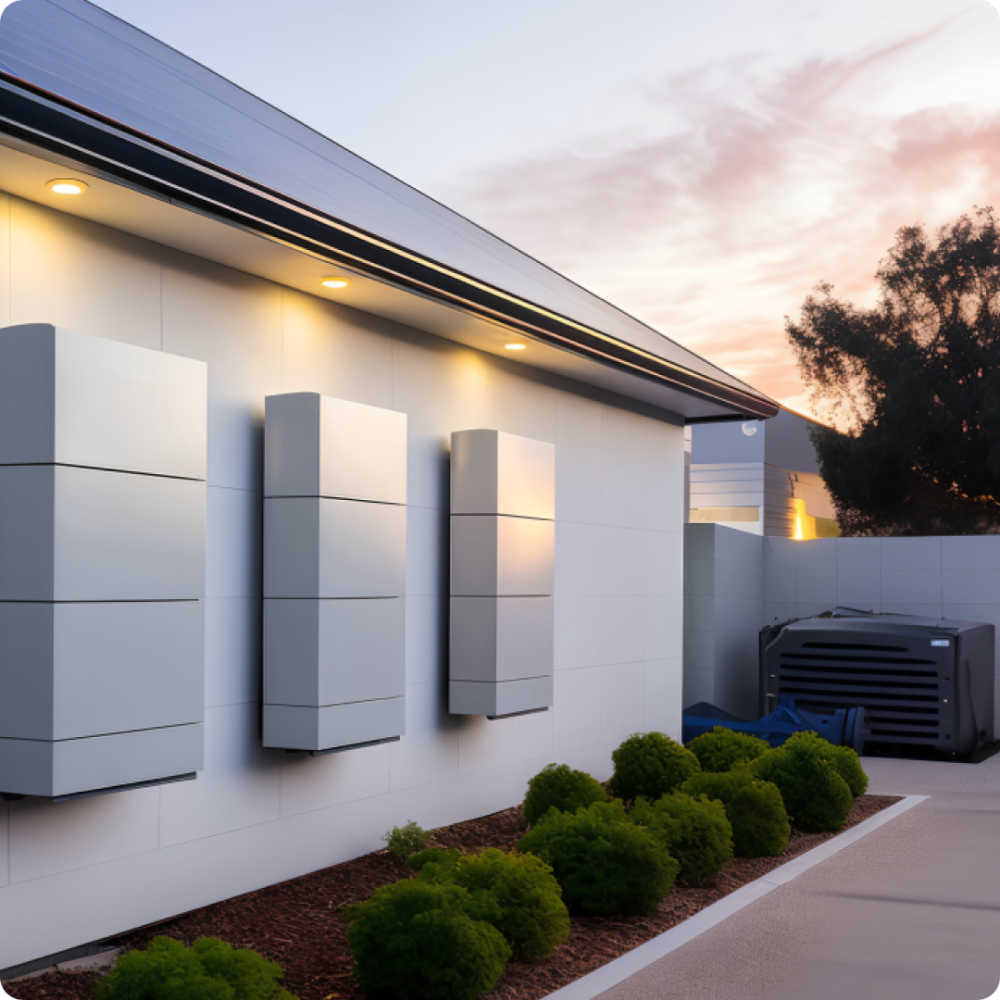
What 2025 and 2026 are showing us is the inversion. Batteries installed at scale, doing the real work, they’re storing energy, dispatching to the grid during peak demand, protecting homes when the power goes out, and increasingly, paying homeowners back for all of it. The solar charges them, and then the magic happens.
GoodLeap just crossed 50,000 residential home battery installs across our loan and TPO financing products.
We deployed 68.4 MW of GoodGrid VPP eligible storage in all of 2025. By the end of April 2026, we were already at 63.5 MW, roughly 93% of last year’s full-year volume in just four months. That is not a normal growth curve. That’s a signal.
A Third Lever for the Grid
Resource planning has always had two levers for responding to peak demand: build more generation or pay large customers to curtail. The first is slow. Both are expensive and can take years before a single megawatt shows up when the grid needs it.
A residential VPP fleet at this scale adds a third lever, one that grows by enrollment instead of years of construction. A single home battery can dispatch 7 to 15 kWh during a grid event. Aggregate that across tens of thousands of homes and you have hundreds of megawatts of fast, behind-the-meter capacity available during a heat wave, a cold snap, or a summer evening peak. No new substation. No new peaker plant. No new transmission line needed.
The capacity is already in the ground. The question for utility planners is whether their modeling reflects that reality and most resource planning today does not account for this reliable capacity.
What Scale Actually Unlocks
At 100 batteries, you have a pilot. At 50,000, you have infrastructure, and the programs that weren’t economic to design at small scale become straightforward. Targeted dispatch in constrained feeders. Coordinated capacity market participation. Responding to demand fast enough and large enough to move the needle during the hours that matter most.
There’s a resilience dimension here too. A megawatt inside a neighborhood behaves differently than one at a distant generation facility when a wildfire shutoff hits or a winter storm takes down transmission. The electrons do not have to travel through the infrastructure that just failed. They are already there.
The Deployment Curve Is the Real Story
Going from 68.4 MW for a full year to 63.5 MW in four months doesn’t happen because one company executed well. It happens because the underlying economics shifted in a way that unlocked a new category of customers entirely.
That shift, and what it means for where residential storage goes from here, is worth its own piece. The short version: changes to the ITC made leased and PPA battery assets the fastest-growing segment in residential storage, and every one of those assets is an enrolled, dispatchable grid resource from day one.
Affordable access didn’t just expand the market. It expanded the grid.
No utility issued an RFP for a virtual power plant of tens of thousands of batteries. No grid operator designed it top-down. It was built one home at a time. The grid infrastructure of the next decade is going to look entirely different than the grid of the last century.
The grid needed scale to take residential storage seriously. Next up: we’ll look at the homeowners who built it and the changing market frameworks.