

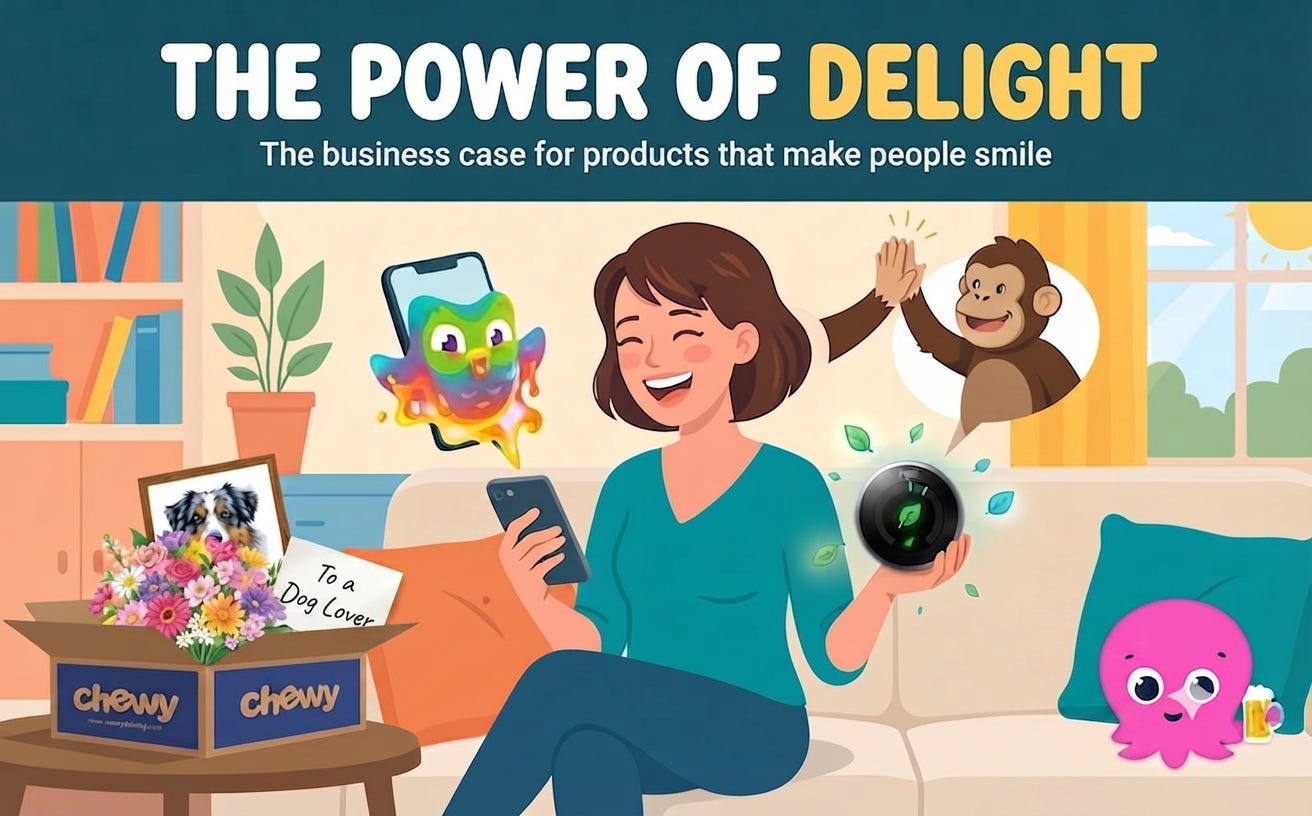
When the Texas grid ran tight on a 105-degree afternoon, Octopus Energy used to throw a party. The retailer hosted happy hours, announced a few days ahead when forecasts showed a demand crunch, built to pull customers out of their houses during the event window. An empty house is an idle air conditioner, and a few thousand idle air conditioners add up to real relief on the ERCOT grid. Look at what everyone walks away with. Customers get a free cold drink and a fun evening. The grid gets capacity at the exact hours it needs it. And an energy company becomes the brand that bought you a beer.

Most demand response programs send a push notification that says “please use less electricity.” Octopus solved the same problem with a happy hour. That difference has a name, and I found it put best in a book I have been reading this month, Starting a Startup by James Sinclair, in a passage that earned a highlight, a dog-ear, and now a full article:
“Create experiences that make users smile, that make their lives easier, that they can’t help but share with others. Because you’re not just building a product, you’re crafting an experience, you’re solving problems, you’re making people’s lives better, easier, more enjoyable. That’s the power of delight.”
I think delight is one of the most underpriced assets in business. It is not a garnish you add at the end. It is a strategy with measurable returns. So, let’s look at some of the best delight ever shipped, what it did for the businesses that built it, the users who felt it, and occasionally the world outside both. Then I’ll close with recommendations for cultivating delight in whatever customer experience you’re designing.
Delight is earned, not decorated
Let’s start with a definition first, because the word gets misused. Confetti on a broken checkout flow is not delight. Every product climbs a hierarchy:
First it’s functional
Then it’s easy
Then it can be delightful
Delight is the moment a product exceeds the emotional expectation a user brought to it. Nobody expects an energy bill to be funny or a language app to feel like a friendship. The surprise, the smile, the laugh out loud is the opportunity.
Every example below follows the same pattern. A company did the foundational, but maybe boring work first, then spent real effort on moments most competitors considered optional or even pointless.
The compound interest of small moments
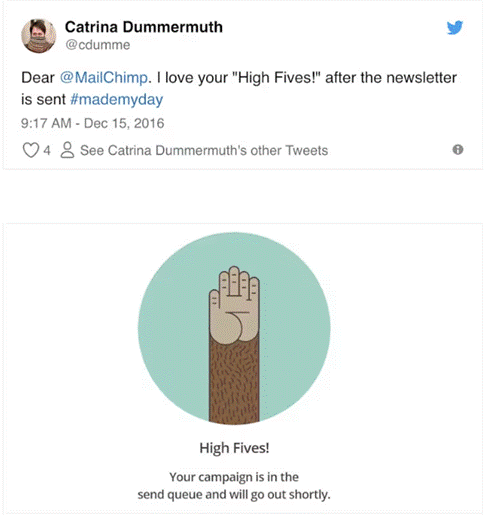
Mailchimp mapped the emotional geography of its product better than almost anyone. Sending an email to 100,000 people is a sweaty-palm moment with one typo being permanent. So, after you hit send, Freddie the chimp offers you a high five. Two seconds of animation, aimed at the single most anxious click in the product. That is the craft: delight placed where the emotion peaks, not scattered at random.
Duolingo turned the same thinking into a retention engine. The streak looks like a toy. The numbers behind it are serious. Learners who reach a seven-day streak are 2.4 times more likely to return the next day, over 5 million users have held streaks of a year or longer, and churn fell from 47% in 2020 to roughly 28% in core markets, per Sensor Tower and Duolingo’s own reporting. The streak, the passive-aggressive owl, and the celebration animations compound into one of the best retention curves in consumer software. If your goal is a high daily active user count, repeated engagement, and reduced churn, a streak feature may be for you.
Then Duolingo found a delight channel most teams never think to touch, the app icon itself. In October 2023 the icon melted. Duo drooped down the tile, eyes sagging, beak distorted, and millions of users opened the app to figure out why. A later update made him visibly ill, red-rimmed eyes and a snotty beak, because the owl was, in the company’s words, “quite literally sick of reminding everyone to do their lessons.” Duolingo was open about the goal: get learners to open the app. The icon is a tiny amount of real estate every user sees on their home screen daily, and Duolingo turned it into a living character whose mood depends on whether you showed up. Users who hold a 30-day streak earn access to custom icons as a reward. The owl became a meme, the meme became free marketing, and the icon became a retention lever hiding in plain sight.

Spotify redesigned their app icon as well to commemorate their 20th anniversary in May 2026, turning their logo into a glittery disco ball. Many users took to social media to post about their distaste of the change, but that triggered one of Spotify’s goals, to increase social media engagement and free marketing. It interrupted people’s behavior and people opened up the app again as a high ROI marketing tactic.
The grand gesture
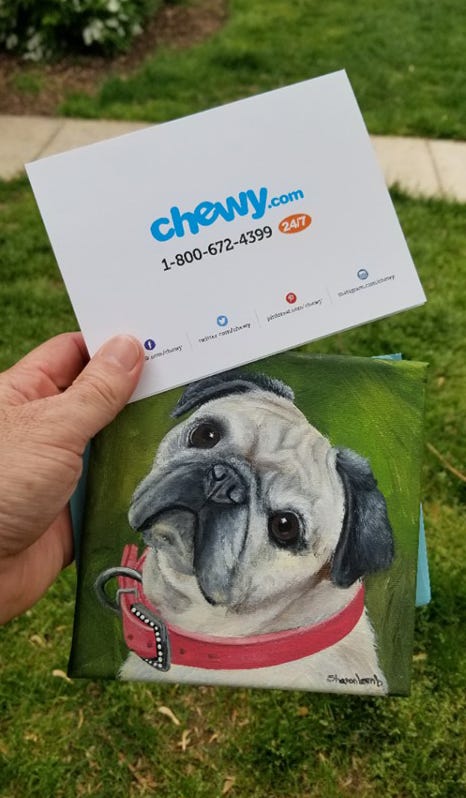
Some delight is quiet craft. Some is an act of humanity so unexpected is resonates with true emotional significance. Chewy is the case that usually comes to my mind as a pet owner and dog lover. When a customer’s pet dies, Chewy has refunded the unopened food, suggested donating it to a local shelter, and sent flowers with a handwritten card. The company works with over 1,000 local artists to send hand-painted pet portraits, sometimes for no occasion at all. In 2022 a customer named Anna Brose tweeted about that exact experience after losing her dog. The post drew over 600,000 likes, and the replies filled with people saying they were moving their pet spend to Chewy; Fortune covered the whole arc. One act of care became a customer acquisition event no ad budget could buy.
Delight in unlikely places
I build products in power and energy, an industry with no reputation for making anyone smile. That is exactly why my favorite delight examples come from my own back yard. The bar is on the floor, so the returns are enormous.
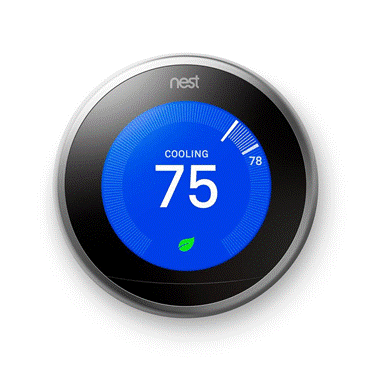
The Nest thermostat’s green Leaf might be the most elegant behavioral design in any home product. Set a temperature that saves energy and a small leaf appears on the dial. No lecture, no kilowatt-hours, no guilt. Millions of people nudged the thermostat a degree to earn a pixel plant. And the Leaf quietly moves its own targets as it learns your habits, the threshold to earn it shifts, so it keeps leading you toward energy savings. It’s a game you don’t realize you’re playing, and the prize is a lower electricity bill.
Octopus runs a similar play across its whole business, and the happy hours are one expression of a deeper culture. In the UK, the company writes emails on a first-name basis, cracks jokes in support chats, and spins a wheel of fortune that rewards customers for submitting meter readings. Its Saving Sessions program has paid customers over £1 million for shifting usage away from peak hours, turning grid flexibility into a rewards game. Bain’s 2023 State of CX UK report measured the cumulative result: an NPS 39 points above the industry average, the largest gap of any company in any sector. That loyalty helped Octopus become the UK’s largest retail energy supplier. When every competitor sells the same product at nearly the same price, being loved is the moat.
One more thing about the energy examples. Every Nest Leaf earned is a negawatt, or energy that would typically be consumed but is never generated. Every customer sipping a happy hour drink during a demand response event is load off the grid at its most stressed hour. Every customer who likes their utility is more willing to join a smart tariff, shift EV charging overnight, or enroll a battery in a virtual power plant. Aimed well, delight changes physical outcomes on the grid, and the retention curve comes along for the ride.
What delight actually buys
Three layers of return show up across all of these. The business gets retention, word of mouth that pushes acquisition cost toward zero, and pricing power plus forgiveness when things break. The user gets a product that treats them like a person having an emotional experience: anxiety, grief, pride, boredom. These experiences are rare enough to be memorable. And when delight points at behavior that helps people, like daily language learning, saved energy, or donated pet food, the compounding continues outside the P&L.
One honest caveat. The same mechanics can be aimed the wrong way. A streak can motivate, or it can manufacture anxiety. A charming interface can serve the user’s goal, or camouflage the company’s. My test is simple: does this moment serve what the user is trying to do, or only what we want them to do? Delight that fails that test is manipulation with better art direction.
Cultivating delight in your own product
So how do you build this into whatever customer experience you’re designing? Two prerequisites, then three practices.
The prerequisites: earn the right first, because no amount of confetti celebrations fixes a flow that fails and frustrates a user along the way. And give your team explicit permission for craft, because nobody writes witty copy for a landing page when every sprint is a fire drill. Chewy’s agents send flowers without asking a manager. That is a staffing and empowerment decision, made long before it becomes a viral tweet.
Practice one: solve the need your customer realizes they have in the moment, before they express it. This is the highest form of delight because it proves you understand their life, and it converts a pain point into a loyalty point. Chewy refunds the food before the grieving customer asks. Octopus invites you to a happy hour before you’ve consciously thought “I’d rather be anywhere but this hot house.” The Nest Leaf answers “am I doing this right?” before the question forms. Study the moments where your customer is about to need something, then give them the solution early. Anticipation, more than surprise, is what people describe when they say a product feels like magic.
Practice two: do things that make users smile or laugh, on purpose and in the right place. Map the emotional peaks of your journey, the send button, the first bill, the bad news, the 404 page, and aim there, because delight placed at a peak is worth ten placed at random. Freddie’s high five lands at the scariest click in Mailchimp. Duolingo’s melting icon lands on the home screen at the exact moment a streak is about to die. A joke in a support chat lands when the customer expects a script. Humor is a risk, and that is precisely why it works. A brand willing to be funny reads as a brand actually run by real people.
Practice three: use design to deliver a curated experience rather than an exhaustive one. Curation means making choices for the user instead of handing them thirty settings to choose from. Nest compressed an entire home-efficiency report into one green leaf. Duolingo compressed motivation into a single streak number with a flame next to it. In each case the design team decided what the user should feel and cut everything that competed with it. If your product’s best moment requires the user to configure it, you haven’t designed it yet.
Then measure the echo and virality. Screenshots, unprompted posts, a customer showing their phone to a friend and prompting a referral. Those are delight’s native metrics and they lead to the retention and referral numbers your CFO cares about.
Sinclair’s quote still holds weight, parapharsed: create experiences that make users smile, make their lives easier, and often those experiences will lead to them sharing that experience with their network. Every product is a stream of moments in someone’s day, and each moment is a choice: make it just functional or make it worth a smile? The companies above chose the smile and collected loyalty, growth, and in a few cases a slightly better grid.